The Truth About the TECO Solar Interconnection Timeline



The TECO solar interconnection timeline is not a single waiting period dictated by the utility. It's a multi-stage process governed by three separate entities: your solar installer, your local permitting authority (AHJ), and TECO. Your installer's expertise in managing the handoffs between these groups is the single most important factor in accelerating your journey to "permission to operate."
The Disconnect: Why Your Solar Panels Aren't Saving You Money on Day One
You’ve made the decision. You’ve signed the contract, visualized the sleek photovoltaic panels on your roof, and imagined the satisfying drop in your monthly Tampa Electric Company bill. The installation day arrives, a whirlwind of activity as a professional crew mounts the hardware, runs the conduits, and installs the inverter. It looks finished. It feels finished. You walk outside, admire your new home power plant, and wonder when you can flip the switch. The answer, unfortunately, is "not yet."
This is the moment of realization for many new solar homeowners—the discovery of the gap between "system installed" and "system operational." This period, often filled with frustrating silence and a sense of limbo, is the solar interconnection process. It’s the formal, regulated procedure of connecting your customer-owned generation system to the electric grid. And until TECO grants you official Permission to Operate (PTO), your multi-thousand-dollar investment must legally remain dormant.
Many homeowners assume this waiting game is solely in TECO’s hands, a bureaucratic delay at a large utility. But that’s a critical misunderstanding. The actual timeline, from the day you sign to the day you generate your first kilowatt-hour of clean energy, is less about TECO's internal clock and more about a complex relay race. The baton is passed between your solar installer, your city or county’s permitting office, and finally, the utility. A dropped baton at any stage means a delay for you. Understanding this three-part dynamic is the first step toward taking control of your solar project milestones and avoiding unnecessary, costly delays.
Deconstructing the Timeline: It's Not One Clock, But Three
To truly grasp the TECO solar interconnection timeline, you must stop thinking of it as one long countdown timer and start seeing it as three distinct, interlocking clocks. The total time is the sum of these phases, and the efficiency of the transitions between them is paramount. An elite solar installer doesn't just install panels; they are expert project managers, obsessed with minimizing the downtime between each stage.
Clock #1: The Local AHJ Permitting Gauntlet
Before a single bolt can be attached to your roof, your project must be approved by the local Authority Having Jurisdiction (AHJ). This is typically your city or county’s building and permitting department. This is, without a doubt, one of the most unpredictable and variable stages of the entire homeowner solar journey. The United States has a patchwork of regulations, with review and approval processes from 20,000 distinct jurisdictions (AHJs) and 3,000 utilities that can add weeks or months to the solar installation process. This isn't just a national issue; it's a hyper-local one. The requirements and timelines in Hillsborough County can differ significantly from those in Pinellas County or Polk County.
What happens during this phase?
- Plan Submission: Your installer’s engineering team creates a detailed set of plans for your residential solar system. This includes a site plan showing panel layout, electrical schematics like the single-line diagram (SLD), structural engineering letters to verify your roof can handle the load, and equipment specification sheets for your panels and inverter.
- Plan Review: A plan reviewer at the AHJ examines every detail of the submission to ensure it complies with the Florida Building Code, the National Electrical Code (NEC), and any specific local ordinances. They check for wind load calculations (critical in Florida), proper electrical grounding, and fire safety setbacks. -
- Revisions and Resubmission: Any error, omission, or deviation from the specific format the AHJ prefers can result in the plans being rejected. The installer then has to make corrections and resubmit, re-entering the queue and adding significant delays. This is where an installer's local experience is invaluable. A contractor who works in Hillsborough County every day knows the specific nuances the plan reviewers look for, vastly increasing the odds of a first-pass approval.
This permitting stage is a well-documented bottleneck in the solar industry. In fact, analysis shows that in 2024, 'local permitting challenges' were a key factor contributing to a 47% decrease in new solar capacity entering the national interconnection queue. It highlights just how critical this first step is. Forward-thinking jurisdictions are adopting tools like SolarAPP+, an automated platform that can dramatically speed things up. Research has demonstrated that SolarAPP+ can reduce permit review times from as many as 20 business days to zero, resulting in projects being installed 12 days faster. When vetting an installer, ask if they have experience with AHJs that use this platform.
Clock #2: The Physical Installation and Inspection
Once the permit is in hand, the most visible part of the project begins. This phase is often the fastest, typically taking only one to three days for a standard rooftop solar installation. However, its efficiency is entirely dependent on the logistics and expertise of your installer.
- Logistics and Scheduling: The installer must coordinate material delivery (panels, racking, inverters), schedule their installation crew, and arrange for any necessary equipment like lifts. Any hiccup in the supply chain or crew availability can push your installation date back.
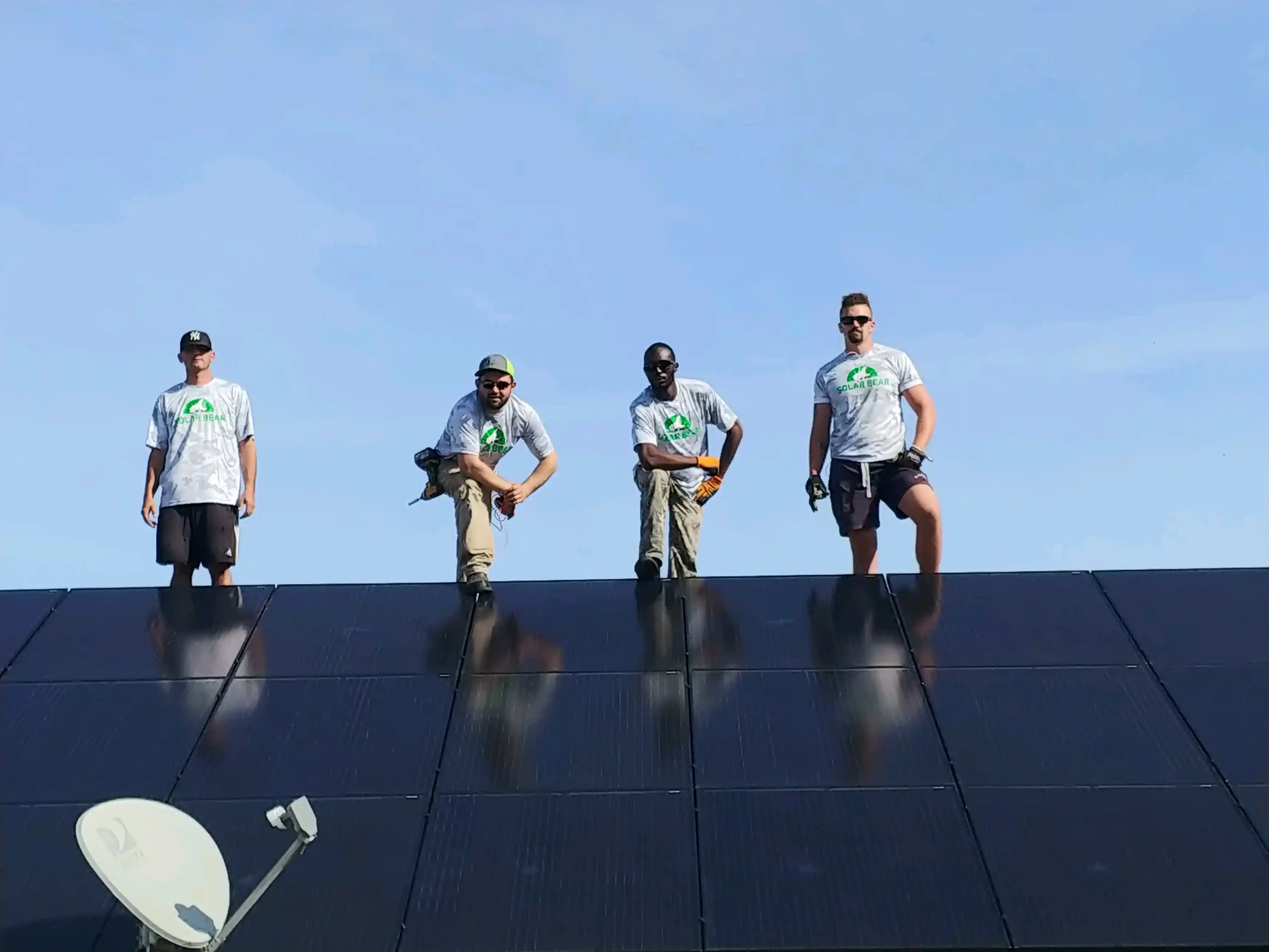
- Roof Preparation and Installation: This is where a company’s dual certification in both solar and roofing offers a profound advantage. Before the solar installation begins, a thorough roof inspection is critical. If any issues like old shingles or soft decking are found, they must be addressed. A dedicated solar company would have to stop work and bring in a third-party roofer, causing delays and potential communication gaps. A dual-certified contractor like Solar Bear handles this seamlessly, in-house, ensuring the foundation for your solar system is sound without derailing the project timeline.
- System Installation: The crew installs the racking system, mounts the photovoltaic panels, and runs the electrical conduit. They will install the inverter, any necessary subpanels, and the required AC disconnect switch, ensuring every component meets the specifications of the approved plans.
- The AHJ Electrical Inspection: After the installation is complete, the project is not yet finished. The same AHJ that issued the permit must send an inspector to your home to verify that the work was done to code and matches the approved plans. They will check wire gauges, breaker sizes, grounding, and overall workmanship. Passing this inspection on the first attempt is crucial. A failure means a reinspection, which can add days or even weeks to the timeline. An experienced installer knows what inspectors look for and builds the system to exceed code requirements, ensuring a smooth approval. Only after passing this inspection can the final paperwork be submitted to TECO.
Clock #3: TECO's Final Interconnection and PTO
With the installation complete and the city or county inspection passed, the baton is now officially passed to Tampa Electric Company. Your installer is responsible for compiling and submitting the final interconnection application package. This is the last leg of the race, and while it follows a defined process, it requires diligent follow-up.
- Final Paperwork Submission: Your installer submits the signed-off permit, the Certificate of Completion (COC), final "as-built" diagrams if anything changed during installation, and photos of the completed work to TECO's distributed generation (DG) department.
- TECO's Engineering Review: A TECO engineer reviews the final package to ensure the system that was installed matches the one that was initially approved. They verify the system size, inverter specifications, and safety features. This is a final check to confirm your system can safely operate in parallel with their grid infrastructure.
- Net Metering Agreement: Concurrent with the review, you will be sent the official TECO Net Metering Agreement to sign. This legal document outlines the terms under which you will sell excess power back to the grid and receive credit, as governed by the Florida Public Service Commission (PSC).
- Bi-Directional Meter Installation: Once the engineering review is complete and the agreement is executed, TECO will schedule a technician to come to your home and swap your standard utility meter for a bi-directional meter. This special meter can measure power flowing in both directions—from the grid to your home, and from your solar panels back to the grid. This is a physical requirement for net metering to work.
- Permission to Operate (PTO): This is the finish line. After the meter is installed and all internal checks are complete, TECO will issue the official PTO letter, usually via email to both you and your installer. Only now can you legally turn on your system and begin generating your own power.
The total application to PTO timeline is the sum of these three clocks. A delay in any one phase has a domino effect, pushing back everything that follows. The installer's role is to act as the master project manager, ensuring each clock starts ticking the moment the previous one stops.
The 10 kW Tipping Point: Your System Size's Impact on the Timeline
One of the most powerful levers you and your installer can pull to accelerate the entire interconnection process has nothing to do with paperwork or phone calls. It has to do with design. Specifically, designing your system to be a "Tier 1" or Level 1 Interconnection project, which for TECO and many Florida utilities, means keeping the total AC output of your system at or below 10 kilowatts (kW).
Crossing this 10 kW threshold moves your project into a different category—Level 2 Interconnection (Standard)—which introduces additional requirements, costs, and potential for delay. Understanding this distinction is a critical piece of information gain for any prospective solar owner.
The Simplicity and Speed of a Tier 1 System (10 kW or less)
Utilities create these tiers to streamline the processing of the vast majority of residential solar systems, which fall under this 10 kW cap. The grid can typically accommodate these smaller systems without requiring extensive engineering analysis. By designing your system to be, for example, 9.9 kW, you unlock several key advantages:
- No Application Fee: For Tier 1 systems, TECO generally waives the application fee, saving you a few hundred dollars right from the start.
- No Additional Insurance Requirement: This is a major benefit. For systems over 10 kW, TECO requires the homeowner to obtain and maintain a general liability insurance policy of at least $1 million and to name TECO as an additional insured party. This is an added cost and a significant piece of administrative work that is completely avoided by staying in Tier 1.
- Simplified Engineering Review: TECO’s internal review process for Tier 1 systems is standardized and expedited. Because the impact on the local grid is presumed to be minimal, the need for a detailed, time-consuming impact study is eliminated.
- Leveraging State-Level Incentives: Your installer can take advantage of state policies designed to promote smaller systems. For example, Florida offers streamlined permitting and inspection for Tier 1 solar systems (10 kW or less), which a skilled installer can use to significantly shorten the pre-installation timeline with the AHJ.
The Added Complexity of a Tier 2 System (Over 10 kW)
If your energy needs demand a system larger than 10 kW, it is by no means a deal-breaker. However, you must be prepared for a more involved and potentially longer process. Moving into Level 2 Interconnection introduces several new hurdles:
- Mandatory Application Fees: You will be required to pay a non-refundable application fee to cover the utility's cost of a more detailed review.
- $1 Million Liability Insurance: As mentioned, you will need to work with your insurance provider to secure a policy that meets TECO's requirements, adding an extra step and ongoing cost.
- Potential for Interconnection Studies: If TECO's initial review determines your large system could potentially impact the stability or safety of the local grid infrastructure, they may require one or more interconnection studies. These can include a Feasibility Study, an Impact Study, or a full Facility Study. Each of these studies adds significant time—weeks or even months—and cost to the project. They are designed to identify any necessary grid modernization or upgrades, such as a new transformer, that might be needed to support your system, the cost of which could fall to you.
The takeaway is clear: if your annual energy usage can be offset by a system that is 10 kW or slightly less, strategically designing it to fit within the Tier 1 category is one of the most effective ways to simplify your project, reduce costs, and shave significant time off your application to PTO timeline. A great solar consultant will not just try to sell you the biggest system possible; they will analyze your energy bills and present the pros and cons of crossing that 10 kW threshold, allowing you to make an informed decision.
Your Installer as Project Manager: The Hidden Accelerator (or Brake)
We've established that the journey to PTO is a three-stage race. Now, let's focus on the coach, quarterback, and logistics coordinator for the entire operation: your solar installer. The single greatest variable in your interconnection timeline is not the inherent speed of the TECO bureaucracy or the backlog at the permitting office; it is the project management efficiency and proactive communication of the company you hire. Common delays are almost always a result of fumbled handoffs—paperwork submitted incorrectly, a missed email from a plan reviewer, or a failure to follow up on an application's status.
This is why vetting an installer should feel less like hiring a construction crew and more like hiring a high-stakes project manager. Their ability to navigate bureaucracy is just as important as their ability to install panels. We constantly hear from clients who appreciate our comprehensive approach. As one customer noted about their experience, it was the seamless management of the entire process, from the first consultation to the final green light from the utility, that made all the difference.
A Nuanced Comparison of Timeline Factors
Let's break down the pros and cons of the three main entities that control your timeline, highlighting why your installer's role is so pivotal.
TECO's Internal Processing Speed
Pros: TECO has a standardized, well-defined process for distributed generation applications. The steps are clear, and they have an online portal for tracking application status. As a large organization, they have dedicated teams for engineering review and meter installation, leading to a generally predictable workflow once they have a complete package.
Cons: They are processing a high volume of applications, which can lead to backlogs, especially during peak seasons. As a large utility, reaching a specific person to get a detailed status update can be challenging. For the homeowner, it can often feel like a "black box" where you are waiting for a decision with little insight into the current progress. Their timelines are largely fixed and non-negotiable.
Installer's Project Management Efficiency
Pros: This is the most controllable variable in the entire equation. A top-tier installer has a dedicated team or individual (an interconnection specialist) whose sole job is to manage permitting and utility applications. They use project management software to track every milestone, anticipate the next step, and proactively communicate with both the AHJ and TECO. They know that speed is money for their clients and act with urgency. Their constant communication, even if it's just to say "we're still waiting," provides immense peace of mind.
Cons: A disorganized installer is the single biggest risk to your project's timeline. Incomplete permit packages, slow responses to AHJ correction requests, delays in submitting the final COC to TECO—these are unforced errors that can add months of delay. Poor communication from an installer creates immense homeowner anxiety and frustration, turning an exciting project into a stressful ordeal.
Local Permitting Authority (AHJ) Approval Timelines
Pros: The AHJ's review process is a critical consumer protection. It ensures your system is installed safely and meets rigorous building and electrical codes, protecting your home and family. Their role is essential for maintaining high standards in the construction industry.
Cons: AHJs are notoriously variable. Timelines, submission requirements, and interpretation of code can differ dramatically from one county to the next. They can be understaffed and overwhelmed with applications, leading to long queues. An installer without deep, specific experience in your particular AHJ (be it Hillsborough County, or another municipality) will be learning the local nuances on your time, almost guaranteeing delays.
Key Questions to Vet an Installer's Project Management Prowess
When you are interviewing potential solar installers, you need to dig deeper than just the price per watt or the brand of panels they use. You need to assess their capability as a project manager. Here are the crucial factors to investigate:
Installer's experience with my local AHJ permitting.
Don't accept a generic "yes, we work in this area." Ask specific questions: How many systems have you installed in my county in the last year? What is your average permit approval time with this specific AHJ? Are you familiar with any unique requirements or common stumbling blocks here? An installer who can confidently answer these questions for a jurisdiction like Hillsborough County demonstrates true local expertise. They aren't just a national company with a local sales team; they have boots-on-the-ground operational experience where it matters.
Installer's process for managing the utility interconnection application.
This peels back the curtain on their back-office operations. Ask them to walk you through their process after the installation passes inspection. Do you have a dedicated interconnection department or specialist? What is your standard procedure for submitting the final paperwork to TECO? How frequently do you follow up with the utility on the application status? Do you use a software portal where I can track my project's progress? A well-oiled machine will have clear, confident answers to these questions.
The clarity and frequency of communication from the installer's project manager.
This is about setting expectations. The solar journey involves periods of waiting that are outside of anyone's control. A great project manager understands this and communicates proactively. Ask them: Who will be my single point of contact after I sign the contract? How often can I expect to receive updates, and in what format (email, text, phone call)? A commitment to a weekly update, even if the news is "no news," is a sign of a customer-centric company that respects your investment. It’s this kind of dedicated team effort that prompts reviews like this one from a recent client: “Tom, Brittany, the Blue Team install crew and Hugo all helped expedite our dream project.” This highlights a team that is coordinated and focused on the customer's success.
Answering Your Critical Solar Questions
Navigating the world of solar energy involves learning a new language filled with technical jargon and rules of thumb. To provide further clarity, we've compiled answers to some of the most common questions homeowners have during their research phase. Understanding these concepts will empower you to have more productive conversations with potential installers.
What is the solar interconnection process?
The solar interconnection process is the official, end-to-end procedure required to get a privately owned power generation system, like your rooftop solar panels, approved and connected to the public utility grid. It's a journey with distinct steps designed to ensure safety, reliability, and proper billing. While the specifics can vary slightly, the general progression is as follows:
- Initial Application: Your installer submits a detailed application to TECO, including system design, equipment specifications, and a single-line diagram.
- Utility Engineering Review (Initial): TECO engineers review the design to ensure it meets their technical requirements and won't negatively impact the grid. They issue an approval that allows the project to proceed with permitting and construction.
- AHJ Permitting: The plans are submitted to your local city or county building department for review and approval.
- Physical Installation: Once the permit is issued, your installer builds the system on your property.
- AHJ Final Inspection: A local inspector verifies the completed installation meets all code requirements and signs off on the permit.
- Final Documentation to Utility: Your installer submits the passed inspection report, a Certificate of Completion (COC), and other final documents to TECO.
- Utility Engineering Review (Final): TECO performs a final review of the as-built system.
- Net Metering Agreement: You sign the agreement that governs how you'll be credited for excess energy sent to the grid.
- Bi-Directional Meter Installation: TECO replaces your existing meter with one that can track the two-way flow of electricity.
- Permission to Operate (PTO): TECO issues the final authorization letter, and only then can you legally energize your system.
What is the 120 rule for solar panels?
The "120 Rule" (or more accurately, the 120% Rule) is a critical safety standard from the National Electrical Code (NEC) that directly impacts the maximum size of a solar system you can install without needing expensive electrical service upgrades. It applies to systems that connect to your main electrical panel through a standard circuit breaker (a "load-side" connection).
The rule states: The sum of the main breaker's amperage plus the amperage of the solar backfeed breaker cannot exceed 120% of the panel's busbar rating.
Let’s make that simple. Imagine a standard home electrical panel:
- Busbar Rating: This is the maximum amperage the panel's internal hardware can safely handle, often 200 amps for modern homes.
- Main Breaker: This is the large breaker at the top that protects the entire panel, typically also 200 amps.
Here’s the calculation:
- Multiply the busbar rating by 120%: 200A x 1.20 = 240A.
- Subtract the main breaker's amperage: 240A - 200A = 40A.
In this common scenario, the maximum solar breaker you can add to this panel is 40 amps. This, in turn, limits the size of the solar inverter you can connect. A seasoned solar consultant will identify this limitation during the initial site survey. If your desired system size requires a larger breaker (e.g., 50 or 60 amps), they will discuss solutions like a main panel upgrade or a "supply-side tap," which connects the solar system ahead of the main breaker. Understanding this rule is crucial, as an unexpected panel upgrade can add thousands of dollars and significant delays to a project.
What is the 33% rule in solar panels?
The "33% rule" is a term that often causes confusion as it's not a formal, universal standard like the NEC's 120% rule. It typically arises from a misinterpretation of older utility guidelines or performance metrics. Let's clarify what it usually refers to and what the modern reality is:
- Outdated Utility Guideline: In the early days of distributed generation, some utilities used an internal rule of thumb that the total amount of renewable energy on a local circuit shouldn't exceed a certain percentage (sometimes 15%, sometimes 33%) of the circuit's peak load without triggering a more detailed impact study. For an individual residential solar owner today, this is largely irrelevant. The modern tiered interconnection process (like the 10 kW rule) has replaced these vague guidelines.
- Misunderstanding of Performance/Degradation: More commonly, homeowners encounter this figure when trying to understand panel performance over time. It's a myth that panels will lose 33% of their power. High-quality, modern solar panels come with two distinct warranties: a product warranty (usually 25 years, covering defects) and a power production warranty (25-30 years). The power production warranty guarantees that the panel will still produce a certain percentage of its original rated power after 25 or 30 years. For top-tier panels, this is typically guaranteed to be between 85% and 92% of the original output, not 67% (a 33% loss). The annual degradation rate is very low, usually around 0.5% per year after the first year.
When discussing performance, disregard any vague "rules" and focus on the manufacturer's official warranty documents for the specific panels you are considering. An expert installer will provide these spec sheets and explain the warranted degradation rate in detail.
How long does it typically take to be connected to a solar farm?
This is an excellent question that highlights the difference between owning a system and subscribing to one. Connecting to a solar farm typically refers to participating in a community solar program, which is fundamentally different from installing a rooftop solar system. TECO offers a program called Sun Select for this purpose.
- Community Solar (e.g., TECO Sun Select): In this model, you don't own any hardware. You subscribe to a "share" of a large, off-site, utility-scale solar farm built and maintained by the utility. You pay a monthly fee for your share, and in return, you receive a credit on your bill for the energy your share produces. The "connection" process is purely administrative. It involves signing up for the program and waiting for the next billing cycle. It's almost immediate—there's no installation, permitting, or interconnection process for you to manage.
- Rooftop Solar (Your Own System): This is what this entire article is about. You own the asset on your roof. The connection process is the physical and administrative interconnection journey we've detailed, involving permits, installation, inspections, and utility approvals.
Community solar offers a simple way to support renewable energy with no upfront cost, but you don't own the system and are essentially renting clean energy. Rooftop solar is a significant home investment that provides greater long-term savings, increases your property value, and gives you direct control over your energy production after receiving your Permission to Operate.
The Final Waiting Game: Understanding 'Installed' vs. 'Permission to Operate'
Of all the phases in the solar journey, the period after the installation crew leaves is often the most trying for a homeowner. The beautiful new photovoltaic array is on your roof, the inverter is mounted neatly on the wall, and everything looks ready. Yet, you've been told you cannot turn it on. This "final waiting game" can last for several weeks, and without proper context from your installer, it can feel like an inexplicable and frustrating delay.
It’s crucial to understand that the wait between "mechanical completion" and "Permission to Operate" is a non-negotiable requirement for both safety and legal reasons. Energizing your system prematurely has serious consequences:
- Safety Risk to Utility Workers: This is the primary reason for the mandated wait. If there is a power outage in your neighborhood, utility lineworkers need to repair the grid. They assume the lines are de-energized. If your solar system is on, it can "backfeed" power onto the grid, creating an island of live electricity where they expect none. This can be lethal. The PTO process ensures that TECO has officially documented your system and can account for it during grid maintenance and emergencies.
- Breach of Your Interconnection Agreement: When you sign the agreement with TECO, you are contractually obligated to operate your system according to their rules. Turning the system on before receiving official PTO is a direct violation of this agreement and could lead to penalties or a refusal to grant final interconnection.
- Inaccurate Billing: Your standard utility meter is not designed to handle the two-way flow of power. If you turn your system on before the new bi-directional meter is installed, any excess power you send to the grid will not be credited to you. In fact, some older analog meters may even register exported power as consumption, meaning you could be charged for the free energy you are providing to the grid.
So, what exactly is happening during this final wait? It is the execution of Clock #3, as we discussed. Your installer submits the passed inspection to TECO. The paperwork enters TECO's queue for final engineering review. Once approved, it moves to the metering department, which schedules a technician to visit your property for the meter swap. Only after the swap is confirmed in their system is the final PTO letter generated and sent. Each step takes time. This is where the communication promise from your installer is put to the test. A proactive project manager will be giving you regular updates: "Just wanted to let you know, we received confirmation TECO has accepted the final package, and we're now in the engineering review queue. Their stated timeline is X days, and we will follow up on that date." This transforms the experience from a frustrating mystery into a transparent, manageable process.
The Role of Energy Storage in the Interconnection Process
As homeowners increasingly seek resilience against power outages, especially in Florida's storm-prone climate, the conversation around solar is expanding to include Energy Storage Systems (ESS). Pairing your solar array with a battery backup system like a Tesla Powerwall or Enphase Encharge is a powerful way to ensure your lights stay on when the grid goes down. However, it's important to understand how adding a battery impacts the interconnection timeline.
Adding an ESS introduces a higher level of complexity to the design, permitting, and interconnection phases. This is not a negative, but it is a reality that needs to be planned for.
- More Complex Design and Permitting: The single-line diagram for a solar-plus-storage system is significantly more intricate. It must show not only the solar components but also the battery, a transfer switch (or system controller), and the circuits that will be backed up during an outage. This more complex plan requires a more thorough review by the AHJ. Additionally, there are specific fire code and placement requirements for large lithium-ion batteries that must be meticulously followed, adding another layer to the permitting review.
- Longer Installation Time: The physical installation of an ESS can add a day or more to the project. It involves mounting the heavy battery unit, installing the system controller, and performing complex wiring within your main electrical panel to isolate the backed-up loads.
- A More Detailed Interconnection Application: The application submitted to TECO must clearly define the battery's specifications and its intended mode of operation. Will it be used for backup only? Or will it be used for "self-consumption," where you store solar energy during the day to use at night? TECO's engineering review of a system with an ESS is inherently more detailed to ensure it operates in a way that is predictable and safe for the grid.
While adding a battery can extend the timeline for getting to PTO, the value it provides is immense. It transforms your solar system from a simple money-saving appliance into a true energy security asset. A contractor with extensive experience in both solar and ESS installations will be able to navigate these added complexities efficiently, building the extra steps into the project plan from day one to minimize delays.
Making the Right Choice for Your Needs
The journey to solar energy is not one-size-fits-all. The ideal solar installer for your neighbor may not be the best fit for you. The key is to understand your own priorities and personality, and then to find a company whose processes and communication style align with your needs. The goal is not just to get solar panels; it's to have a smooth, transparent, and confidence-inspiring experience from start to finish. Based on our experience with thousands of homeowners, we find most customers fall into one of three primary profiles.
The 'Hands-Off' Homeowner
Your Profile: You're a busy professional, a parent, or simply someone who values your time highly. You believe in delegating to experts. Your primary goal is a turnkey service. You want to sign a contract, be kept informed of major milestones, and be told when the system is ready to turn on. You don't want to be bogged down in the details of permitting codes or utility paperwork.
Your Best Choice: You should prioritize a vertically-integrated, full-service company that has in-house teams for every stage of the process: design, permitting, installation, and interconnection. Ask specifically about their project management. Insist on having a single, dedicated project manager as your point of contact throughout the entire process. A company that outsources its installations or permitting is not for you, as it introduces communication gaps you don't have the time to manage. You are buying a service and a result, not just a product.
The 'ASAP Saver'
Your Profile: You've seen the latest TECO rate hikes, and your motivation is primarily financial and urgent. Every month you wait for PTO is another month you're paying a full utility bill. Your main concern is the total number of days from contract signing to system energization. You want speed and efficiency above all else.
Your Best Choice: Your vetting process should be laser-focused on an installer's proven operational speed. Ask for data. What is their average timeline in your specific county, from contract to PTO? Can they provide anonymized case studies or references from recent local projects? You should also work closely with their consultant to strategically design a system under the 10 kW Tier 1 threshold if possible, as this is the single biggest structural advantage for accelerating the timeline. Their deep relationships with the local AHJ and their aggressive, process-driven approach to utility paperwork are your most valuable assets.
The 'Process-Oriented Researcher'
Your Profile: You are a detail-oriented individual who has already done extensive research. You understand the steps, you've read about the technology, and you may already know the difference between a string inverter and a microinverter. You seek a partner who respects your knowledge and can provide a high level of transparency. You want to understand the 'why' behind each step and feel confident that you've chosen a technically proficient and procedurally sound installer.
Your Best Choice: You need an installer who welcomes deep questions and has a transparent, documented workflow. Ask to see a sample project plan. Inquire about the specific experience of their NABCEP-certified designers and interconnection specialists. Discuss technical details like the NEC 120 rule and how they would approach your specific electrical panel. You will thrive with a company that uses a customer portal where you can see real-time updates on permit submissions, inspection scheduling, and utility application status. You value proven processes and clear documentation over salesmanship.
Navigating the TECO solar interconnection timeline successfully comes down to choosing the right partner. It's a journey that requires far more than just technical installation skill; it demands expert-level project management, hyper-local bureaucratic knowledge, and a steadfast commitment to proactive communication. As a dual-certified roofing and solar contractor in business since 2014, we have built our reputation on mastering every step of this complex process for Florida homeowners. Our in-house, dedicated teams ensure that from the moment you sign the contract to the day you receive your Permission to Operate, your project is managed with the precision and care it deserves. If you're in the Tampa, FL area and are looking for a seamless, expertly managed solar journey from initial design to final permission to operate, contact the Solar Bear team today for a comprehensive, no-obligation consultation.