Solar Savings Guide
Learn how getting Solar in Florida can practically pay for itself with Net Metering, Solar Incentives, and more in our Solar Bear Savings Guide.

Strategic "Reduce Before You Produce" Methodology
Maximize your investment with energy efficiency audits. Verified by Blake Ambrester and the Solar Bear engineering team.
Understanding Solar Costs & Value
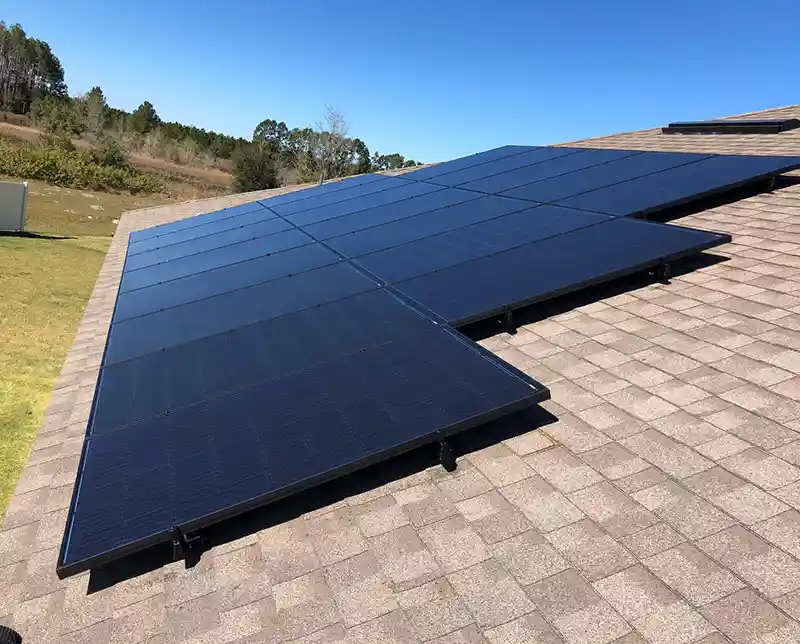
When you go solar, you’re producing your own electricity instead of buying it all from the utility company. While there’s an upfront cost for equipment, installation, and permits, incentives and financing options can make it much more affordable. Over time, those lower monthly power bills really add up — many homeowners save 40–80% or more on energy costs.

Lower Costs with Federal and State Incentives
- Home Solar Sales Tax Exemption Solar panels are typically subject to sales tax just like any other product. The Home Solar System State Sales Tax Exemption eliminates the cost of sales tax on new home solar installation for savings of around 6%.
- Florida Solar System Property Tax Exemption. New solar panels boost your home’s value, thus increasing your property tax. With Florida’s Property Tax Abatement for Renewable Energy Property incentive, you won’t see a raise in your property taxes after going solar
Florida Net Metering Makes Solar Nearly Free
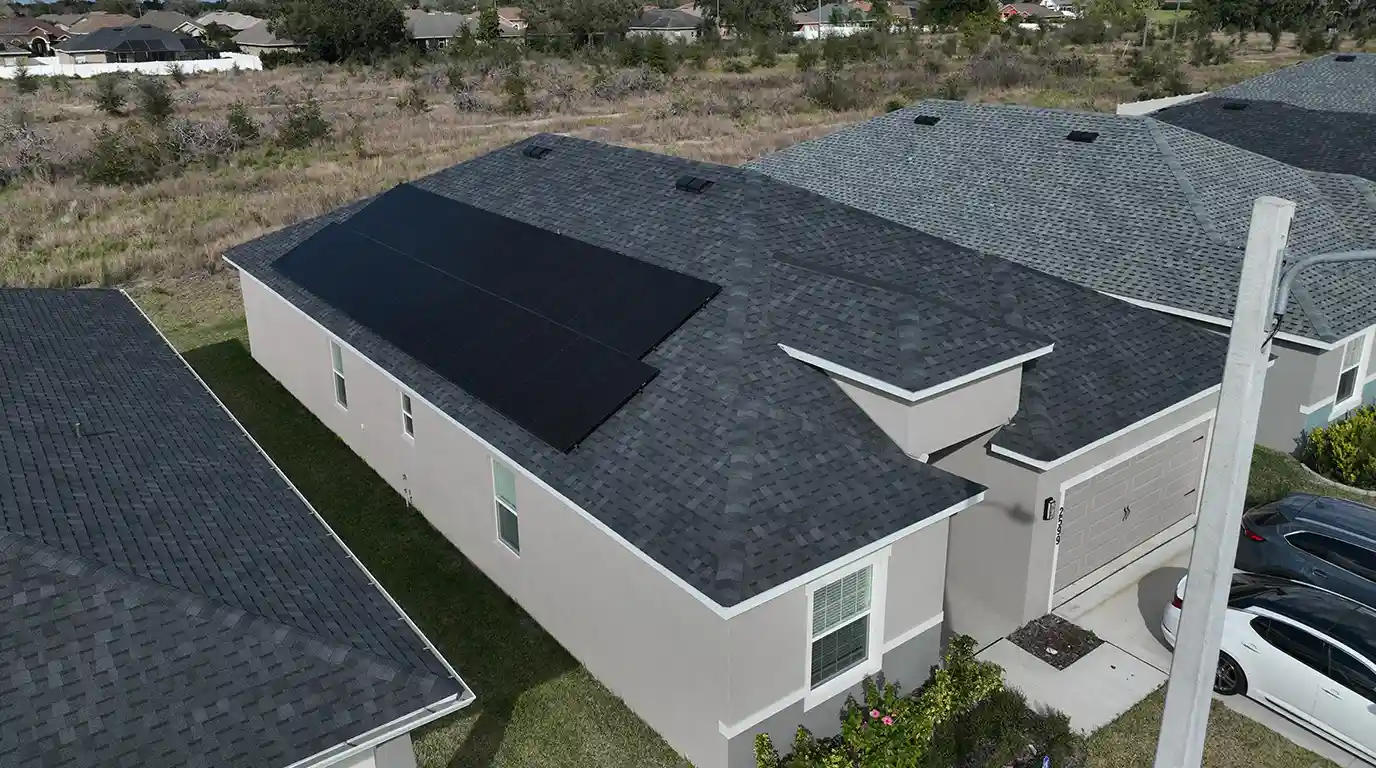
Net metering directs your excess solar energy to the public power grid, gaining you credit on your next electric bill. Any leftover credit at year’s end is paid in cash — meaning a well-sized system could earn you extra money each year. Pair with our Solar Backup Battery Solutions to store excess energy and optimize your savings.
In Florida, homeowners have seen average savings ranging from $50-$300 a month through net metering and solar incentives.
Solar Financing Options For you
At Solar Bear, we offer a variety of easy-to-use financing options for homeowners. During our in-house visit, one of our specialists will help you find the financing options that work for you.
We can offer financing options for practically any job. We work with EnerBank™ and Sunlight Financial ™.
The Ultimate Florida Solar Savings Guide: Why Efficiency Unlocks the Best ROI
Achieving maximum solar savings in Florida isn't just about panels and tax credits. The most effective strategy involves first implementing key energy efficiency upgrades to reduce your home's power consumption. This "reduce before you produce" method dramatically shrinks the required solar system size, lowering the upfront cost and accelerating your return on investment.
The Hidden 'Energy Waste Tax' Costing Florida Homeowners Thousands
In the Sunshine State, many homeowners are unknowingly paying a heavy premium when they go solar - an "Energy Waste Tax." This isn't a government levy, but a self-imposed financial burden that comes from installing a photovoltaic (PV) system on an inefficient home. When your house wastes electricity through poor insulation, an aging air conditioner, or leaky ducts, you are forced to buy a larger, more expensive array of solar panels to compensate for that waste. You're essentially paying to generate clean energy that your home is just going to throw away.
Think of it this way: installing a massive solar energy system on a leaky home is like trying to fill a bucket with a hole in it by using a bigger hose. The smarter, more cost-effective solution is to patch the hole first. Many homeowners focus solely on offsetting their current electric bill, leading to oversized projects. As one customer noted, their experience involved "installing 40 solar panels," a significant residential solar installation that reflects the high energy demands common in the region. While this creates substantial solar energy production, the core question remains: could the same or better financial outcome have been achieved with a smaller system on a more efficient home?
The scale of this wasted energy is staggering. According to federal researchers, cost-effective energy efficiency improvements in Florida single-family homes have the potential to save 17.9 billion kWh of electricity per year according to the National Renewable Energy Laboratory (NREL). Every kilowatt-hour saved is one you don't need to produce, directly reducing the required size and cost of your solar investment.
The Smarter Path to Solar: Your Pre-Solar Energy Audit
The most strategic approach to maximizing your solar savings is to "reduce before you produce." This begins with a comprehensive home energy audit to identify the sources of your highest energy consumption. By addressing these key areas first, you can significantly lower your home's baseline power needs, which allows for a more accurately sized and affordable solar panel installation. This focus on energy efficiency is the foundation of a sound financial investment in renewable energy.
While every home is unique, our years of experience in Florida have shown that a few key upgrades consistently offer the highest return on investment. These are the low-hanging fruit that can slash your electricity costs before a single panel is mounted on your roof:
- Attic Insulation: In Florida's intense heat, an under-insulated attic is a primary source of energy loss. Upgrading to modern insulation keeps cool, conditioned air inside your home, reducing the strain on your AC system—often the single largest consumer of electricity in a Florida household.
- High-Efficiency AC System: If your air conditioner is over 10 years old, upgrading to a new, high-SEER (Seasonal Energy Efficiency Ratio) unit can cut your cooling costs by 20-50%. This one change can drastically lower the overall kilowatt-hour consumption of your home.
- Duct Sealing and Repair: Leaky air ducts in your attic or crawl spaces can lose up to 30% of your conditioned air before it ever reaches your rooms. Sealing these leaks ensures the power your AC uses isn't wasted, making your entire system more effective.
- Variable-Speed Pool Pumps: A single-speed pool pump can be the second-largest energy user after your AC. Switching to a variable-speed model that can be run at lower speeds for longer periods can reduce pump-related energy costs by up to 90%.
Implementing these changes can lead to massive savings for homeowners across the state. In fact, data shows that cost-effective energy efficiency packages can save Florida homeowners a total of $2.1 billion per year on utility bills as reported by NREL. This is money back in your pocket that also lowers the required upfront investment for your home solar system.
The ROI Supercharge Effect: A Tale of Two Homes
To truly understand the power of the "reduce before you produce" strategy, let's compare two hypothetical Florida homes. Both start with an average monthly electric bill of $250, but they take different paths to achieving energy independence.
Home A: The "Solar-First" Approach
This homeowner focuses solely on installing solar panels to cover their existing energy usage. Their inefficient home requires a large system to meet demand.
- Home's Baseline Energy Consumption: 1,800 kWh/month
- Required Solar System Size (kW): A large 14 kW system is needed.
- Upfront System Cost (at an average cost per watt of $2.90): Approximately $40,600
- Long-term Savings & Return on Investment (ROI): The savings are significant, but the high initial cost extends the time it takes to break even.
- Payback Period: Roughly 12-16 years.
Home B: The "Efficiency-First" Approach
This homeowner first invests $5,000 in attic insulation and AC duct sealing. This reduces their energy needs, allowing for a much smaller solar installation.
- Home's Baseline Energy Consumption: Reduced to 1,200 kWh/month (a 33% reduction).
- Required Solar System Size (kW): Only a 9 kW system is needed. This is much closer to the 7.15 kilowatt average system size NREL uses for its modeling according to the Department of Energy.
- Upfront System Cost (Panels + Efficiency Upgrades): $26,100 (solar) + $5,000 (upgrades) = $31,100 total investment.
- Long-term Savings & Return on Investment (ROI): The total initial investment is over $9,000 less, which dramatically "supercharges" the ROI.
- Payback Period: Roughly 10-13 years.
As you can see, Home B reaches its break-even point years faster and saves nearly $10,000 on the total project cost. This illustrates how right-sizing the system sizing from the start is the key to unlocking the best financial outcome.
Solar-First vs. Efficiency-First vs. Solar + Storage: A Clear Comparison
Choosing the right path depends on your priorities. Each strategy offers distinct advantages and trade-offs for Florida homeowners, especially considering our unique challenges like hurricane preparedness and intense sun.
The Solar-First Approach
This common strategy involves installing a photovoltaic system sized to meet your current electricity needs without prior efficiency upgrades.
- Pros: Immediate transition to clean energy, straightforward process focused on a single project.
- Cons: Higher upfront system cost, longer payback period due to powering an inefficient home, potential for oversized system if energy habits change.
The Efficiency-First Approach
This is the "reduce before you produce" method we've detailed. You first lower your home's energy consumption, then install a smaller, more affordable on-grid solar system.
- Pros: Lowest overall investment, fastest return on investment (ROI), increased home comfort from upgrades like insulation.
- Cons: Does not provide backup power during grid outages on its own. The project may be split into two phases (efficiency then solar).
The Combined Solar + Storage System
This approach pairs a properly-sized solar installation with a home battery like a Tesla Powerwall or LG Chem. This is often the ultimate goal for those seeking true grid resilience. A customer, Justin, praised our process, noting our team was "fantastic, he was patient as he worked with us to get" the exact right system for his family's needs, which often involves planning for future battery integration.
- Pros: Maximum energy independence, seamless power during outages (critical for hurricane preparedness), ability to store excess solar power instead of sending it all back to the grid.
- Cons: Highest upfront cost due to the price of solar battery storage. The payback period is typically the longest, making it more of an investment in security than pure ROI. A hybrid solar system of this nature offers the best of both worlds.
Stacking Florida's Savings: A Guide to Incentives and Rebates
Navigating solar incentives in Florida can be confusing because our state's policies differ from others. For instance, Florida has no renewable portfolio standard and does not allow for power purchase agreements (PPAs), two policies that have driven solar investments in other states according to the Solar Energy Industries Association (SEIA). However, savvy homeowners can still stack several powerful financial incentives to reduce the net cost of their investment.
- Net Metering: Florida's net metering policy is a major benefit. It requires utility companies like Florida Power & Light (FPL), Duke Energy Florida, and Tampa Electric (TECO) to credit you for any excess solar power your system sends back to the electric grid. This credit offsets the cost of electricity you pull from the grid at night.
- Property Tax Exemption: While a rooftop solar system increases your home resale value, the Florida Solar Rights Act ensures it won't increase your property tax. This exemption applies to the value added by your residential solar equipment.
- Sales Tax Exemption: Solar energy equipment is exempt from Florida's 6% state sales tax, providing an immediate saving on the cost of your solar panels, inverter, and other hardware.
- Utility Rebates for Energy Efficiency: This is where the "reduce before you produce" strategy truly shines. Many Florida utilities offer rebates for the very efficiency upgrades we recommend, such as new AC units, smart thermostats, or insulation. You can use these rebates to lower the cost of the efficiency improvements, and then use the Federal ITC on the solar portion, creating a multi-layered financial advantage.
Does Florida really pay for solar panels?
The state of FL does not directly pay for or provide free solar panels. This is a common misconception. However, the combination of the state's sales tax exemption, property tax exemption, and mandatory net metering policy significantly reduces the lifetime cost and improves the return on investment, making solar power far more affordable.
Making the Right Choice for Your Needs
There is no single "best" path for every Florida homeowner. The optimal strategy depends entirely on your personal goals, financial situation, and priorities. Here is our expert guidance for three common types of solar buyers.
For the ROI-Focused Saver
Your primary motivation is reducing your monthly electric bill and achieving the fastest possible payback on your investment. You are highly receptive to strategies that lower the initial system cost.
Our Recommendation: The Efficiency-First Approach is unequivocally your best path. By investing a small amount in upgrades first, you will dramatically reduce the size and cost of the required solar system, leading to the quickest payback period and highest long-term ROI.
For the Storm-Ready Prepper
Your main driver is energy independence and resilience, especially for Florida's hurricane season. You value ensuring your home stays powered during grid outages above all else.
Our Recommendation: A Combined Solar + Storage System is the ideal solution. While the initial investment is higher, the peace of mind and security of having a reliable backup power source like a Tesla Powerwall during a prolonged outage is invaluable. We still strongly advise an efficiency audit first to ensure your battery and panels are sized correctly for your essential needs.
For the Eco-Tech Adopter
You are motivated by environmental benefits and adopting modern, clean energy technology. You want to minimize your carbon footprint and may be considering an electric vehicle (EV) in the future.
Our Recommendation: A holistic, phased approach is best. Start with the Efficiency-First model to make your home as green as possible. Then, install a Solar + Storage System that is sized not just for your current needs, but with the capacity to handle a future EV charger. This creates a complete home energy ecosystem for maximum environmental impact and technological integration.
A successful solar project is built on a foundation of expert planning and a deep understanding of your home's unique energy profile. While the promise of solar power is immense, particularly in a state that now generates over 11% of its electricity from solar according to recent data, true savings are unlocked through a smarter, more strategic process. For over eight years, Solar Bear of Orlando, FL has specialized in designing hurricane-ready solar solutions tailored for Florida homeowners, all backed by our industry-leading 30-year warranty. For a personalized assessment and a free quote to discover your home's true solar potential, contact our expert team today.
Ready to Start Saving?



Frequently Asked Questions
How Much Money Can You Save With Solar Panels?
The amount you can save with solar depends on your electricity usage, your local utility rates, and the size of your solar system. Many homeowners save hundreds to thousands of dollars per year on electricity. Over the lifetime of a solar system—typically 25 to 30 years—those savings can add up to tens of thousands of dollars.
How Long Does It Take for Solar to Pay for Itself?
The average solar payback period is usually between 6 and 12 years, depending on installation costs, available incentives, and your energy usage. Because most solar systems last 25–30 years or more, homeowners often enjoy many years of reduced energy costs after the system has paid for itself.
What Factors Affect How Much You Save With Solar?
Your solar savings can vary based on several factors, including your household’s electricity usage, local utility rates, available sunlight, and the size of your solar system. Incentives, tax credits, and net metering policies in your area can also have a major impact on your overall savings.
Do Solar Panels Eliminate Your Electric Bill?
Solar panels can significantly reduce your electricity bill, but they may not eliminate it completely. Some homeowners still pay small utility connection fees or rely on grid power when solar production is lower, such as at night or during extended cloudy periods.
Are Solar Incentives and Tax Credits Still Available?
Yes, many homeowners can still qualify for incentives that lower the cost of installing solar. Programs like rebates and net metering and certain state or local incentives can help reduce upfront costs and increase the long-term savings from going solar.
