Florida Solar Tax Exemption: The Complete 2026 Guide to Stacking Incentives


Yes, Florida offers powerful solar tax exemptions that are crucial for maximizing your return on investment. The state provides a 100% sales tax exemption on the purchase of a new solar system and a 100% property tax exemption on the value solar panels add to your home, which can be stacked with the 30% federal tax credit.
The Common Blind Spot: Why Focusing Only on the Federal Tax Credit Costs Florida Homeowners Thousands
For many homeowners in the Sunshine State, the solar energy journey begins and ends with four words: "the 30% federal credit." It's the most advertised solar incentive in the country, a powerful financial tool that has helped millions of Americans make the switch to clean energy. However, fixating solely on this single federal program is a critical strategic error—one that leaves thousands of dollars on the table and unnecessarily extends the payback period for your home solar system.
The true key to unlocking the maximum financial potential of a residential solar installation in Florida isn't just about claiming one credit. It's about understanding the complete financial ecosystem. The secret lies in a strategic layering of benefits: combining the well-known federal incentive with two formidable, state-specific tax exemptions that Florida offers. One eliminates a significant upfront cost at the moment of purchase, and the other protects you from long-term tax liabilities for decades.
This guide moves beyond the surface-level discussion. We will deconstruct each incentive, provide a clear timeline for how they work together, and equip you with a data-driven framework to make a confident, financially optimized decision. Understanding this three-part structure is the difference between simply buying solar panels and making a truly savvy investment in your home's energy future.
Deconstructing the "30% Solar Incentive": A Federal Credit, Not a Florida Rebate
The first and most crucial distinction to make is that the 30% incentive is not a state of Florida program, nor is it a rebate. It is a federal tax credit officially known as the Residential Clean Energy Credit. This isn't just semantics; the difference between a credit and a rebate has significant implications for your finances.
What is the Residential Clean Energy Credit?
A rebate is a cash payment sent to you after a purchase. A tax credit, on the other hand, is a dollar-for-dollar reduction of the income tax you owe. For example, if you owe $10,000 in federal taxes and have a $9,000 solar tax credit, your tax liability for that year is reduced to just $1,000.
This credit, also known as the Investment Tax Credit (ITC) in a broader context, covers a wide range of costs associated with your solar energy project. This includes not just the solar panels themselves, but also the solar inverter, racking and mounting equipment, labor costs for solar installation and permitting, and crucially, energy storage systems. If you decide to pair your rooftop solar array with a solar battery storage solution like a Tesla Powerwall, that entire cost is eligible for the 30% credit, enhancing the value proposition for energy resilience.
According to the IRS, the Residential Clean Energy Credit equals 30% of the costs of new, qualified clean energy property for your home installed anytime from 2022 through 2032. This provides a long-term runway for homeowners to plan their investment without the pressure of a rapidly expiring program.
Who Actually Qualifies?
Qualification hinges on one key factor: your tax liability. To receive the full benefit of the credit in a single year, you must owe at least that much in federal taxes. Let's use a typical photovoltaic (PV) system as an example. If your system costs $35,000, your available tax credit is $10,500 (30% of $35,000). If your federal tax liability for that year is $12,000, you can claim the full $10,500 credit. However, if you only owe $7,000 in taxes, you can only use $7,000 of the credit that year.
Fortunately, the credit is not a "use it or lose it" benefit. The IRS confirms that the federal Residential Clean Energy Credit is nonrefundable, but any excess unused credit can be carried forward to reduce taxes owed in future years. In the scenario above, you would use $7,000 of your credit in the first year, and the remaining $3,500 would roll over to the next tax year to be applied against that year's liability.
To claim this powerful homeowner incentive, you must complete the correct paperwork. The IRS requires that taxpayers must file Form 5695, Residential Energy Credits, with their tax return for the year the property was put in service. This is a standard part of the process that any qualified tax professional or tax software can handle.
Common Question: Is the 30% Solar Tax Credit Going Away in 2026?
This is a frequent point of confusion, often fueled by high-pressure sales tactics. The answer is no. Thanks to the Inflation Reduction Act of 2022, the 30% credit is locked in for a full decade. The current schedule for the Residential Clean Energy Credit is:
- 2022–2032: 30%
- 2033: 26%
- 2034: 22%
- 2035 and beyond: 0%
While there is no immediate rush, planning your project within the 30% window ensures you capture the maximum federal benefit available.
The Upfront Win: Florida's 6% Sales Tax Exemption on Solar
Now we move from the federal level to the state of Florida, where the savings strategy truly begins to compound. The first major state-level benefit is the Florida Solar and CHP Sales Tax Exemption. This is arguably the most straightforward and immediately impactful of all solar incentives available to Floridians.
Immediate Savings at the Point of Sale
Unlike the federal tax credit, which you claim months later, this exemption saves you money the moment you sign your contract. Florida law exempts solar energy systems from the state's 6% sales tax (and any applicable local option sales taxes). This means the tax is simply never added to your invoice. It’s not a rebate; it's a complete removal of a tax obligation.
Florida has a long history of supporting renewable energy. In fact, Florida's Energy Act of 2006 created a framework for state-level solar incentives, including a 'Renewable Energy Technologies Sales Tax Program' for which businesses could apply, laying the groundwork for the robust exemptions we have today.
Let's quantify this with a simple example. Consider a comprehensive home solar system priced at $40,000. In nearly any other major home improvement project of this scale, you would owe an additional 6%, which is $2,400, bringing your total to $42,400. With the sales tax exemption, that $2,400 charge vanishes. Your total cost remains $40,000. This is an immediate, tangible reduction in the upfront system cost, improving the financial metrics of your project from day one.
What Equipment is Covered?
This exemption is comprehensive and covers the entire solar power system. The Florida Department of Revenue is clear that any "solar energy system" or "renewable energy source device" is exempt. This includes all the core components:
- Photovoltaic (PV) solar panels
- The solar inverter that converts DC electricity to usable AC electricity
- Racking and mounting hardware
- Wiring and electrical components
- Energy storage systems, such as solar batteries
- Solar water heater equipment
By including battery backup in this sales tax exemption, Florida makes it significantly more affordable for homeowners to build a grid-tied solar system with storage, providing not just utility bill savings but also critical power during outages.
The Long-Term Shield: Florida's Property Tax Exemption for Renewable Energy
The second pillar of Florida's solar incentive strategy is a long-term financial shield that protects homeowners for the entire life of their system: the Property Tax Exemption for Renewable Energy. This benefit is less immediate than the sales tax exemption but is arguably more valuable over time.
How Solar Increases Home Value Without Increasing Your Tax Bill
Under normal circumstances, any significant improvement that increases your home's value—like a new kitchen, a pool, or an addition—will be noted by the local property appraiser. This increased valuation then leads to a higher property tax bill, or ad valorem tax, year after year. It's a well-known fact that solar panels increase home value, often significantly. Without a specific exemption, this added value would translate directly into a permanent tax hike.
This is where Florida's forward-thinking policy shines. The state provides a 100% property tax abatement for the assessed value of a renewable energy device. This means your property appraiser cannot include the value added by your rooftop solar installation when calculating your property taxes. Your home becomes more valuable on the market, but your tax bill acts as if the panels don't exist.
This powerful protection was enshrined in the state constitution by a massive public mandate. On August 30, 2016, Florida Amendment 4, which provides property tax exemptions for renewable energy equipment, was approved with 72.62% of the vote. Following this, the legislature passed the necessary laws to put the amendment into practice. As part of the implementation, Senate Bill 90 was filed as the implementation bill for Amendment 4, with language to formally exempt a 'renewable energy source device from the tangible personal property tax'.
The Financial Impact Over Decades
The long-term savings from this exemption are substantial. Let's imagine your new solar array adds $25,000 to your home's resale value. In a Florida county with a typical effective property tax rate of 1.2%, this added value would normally cost you an extra $300 in property taxes every single year ($25,000 x 0.012). Thanks to the exemption, that $300 stays in your pocket.
Over the 25-year expected lifespan of a solar panel system, this exemption alone saves you $7,500 ($300 x 25 years). This is pure, passive savings that directly improves your long-term Return on Investment (ROI) and shortens your system's payback period.
A Step-by-Step Savings Timeline: How Florida Homeowners Stack Their Benefits
Understanding each incentive individually is important, but seeing how they layer together in a real-world scenario is where the true power of this strategy becomes clear. Let's walk through the financial journey of a typical Florida homeowner installing a solar system.
For this example, we'll use a high-quality, comprehensive residential solar system with a total contract price of $45,000 before any incentives.
Step 1: Point of Sale (Day 0) - Immediate 6% Savings
When the homeowner signs the contract, the Florida Solar and CHP Sales Tax Exemption is applied immediately. A standard 6% sales tax on $45,000 would have been $2,700. This tax is completely waived. The homeowner finances or pays for a $45,000 system, not a $47,700 one. This upfront cost avoidance is a critical first step.
- Gross System Cost: $45,000
- Florida Sales Tax (6%): $2,700
- Sales Tax Exemption Savings: -$2,700
- Final Contract Price: $45,000
Step 2: Tax Season (Year 1) - Claiming the 30% Federal Credit
The following spring, when filing federal income taxes, the homeowner files IRS Form 5695. They claim the 30% Residential Clean Energy Credit based on the total system cost of $45,000.
- Final Contract Price: $45,000
- Federal Tax Credit (30%): $13,500
This $13,500 credit directly reduces their tax liability. Assuming they owe at least that much in taxes, their effective net cost for the system is now reduced to $31,500.
- Net System Cost After Federal Credit: $31,500
Step 3: Annually (Years 1-25+) - Zero Added Property Tax
Later that year, the local property appraiser assesses the home's value. They may note the new solar installation has increased the property's market value by, say, $28,000. However, due to the property tax exemption, this entire amount is excluded from the home's taxable value. The homeowner's property tax bill does not increase.
This is especially impactful for larger projects. As one customer noted, their experience involved 'installing 40 solar panels,' a significant residential solar installation that adds substantial value which, without this exemption, would trigger a hefty tax increase in places with higher home values like Miami-Dade County or coastal cities.
Step 4: Ongoing Savings - Net Metering and Reduced Utility Bills
From the moment the system is turned on, the savings begin. Florida has a robust Net Metering policy, overseen by the Florida Public Service Commission (PSC), that is a cornerstone of solar economics in the state. When your solar panels produce more electric power than your home is using, the excess energy is sent back to the grid. Your utility, whether it's Florida Power & Light (FPL), Duke Energy Florida, Tampa Electric (TECO), Gulf Power Company, or a local provider like Orlando Utilities Commission (OUC), must credit you for that energy.
This process requires a bi-directional meter that tracks both the energy you consume from the grid and the energy you contribute. The credits you earn help offset the cost of any electricity you pull from the grid at night or on cloudy days, leading to dramatically lower utility bills. Answering the common question, "Why is my electric bill so high if I have solar?" often comes down to a few factors: a system that was undersized for the home's energy consumption, a significant increase in household energy use after installation, or misunderstanding how net metering credits are applied by the local utility company, which can vary.
Strategic Comparison: Finding the Right Financial Path for Your Home
To make the best decision, it's helpful to compare the different strategic approaches a homeowner can take. We'll analyze three common paths, evaluating them against the key factors that determine financial success.
Strategy 1: Federal Tax Credit Only Strategy
This is the approach taken by homeowners who are only aware of the main federal incentive and don't factor in Florida's state-level tax benefits during their decision-making process.
Upfront system cost Higher. Without accounting for the sales tax exemption, initial cost calculations can be inflated by 6%, potentially discouraging a purchase or leading to a smaller, less effective system. The property tax implications are often overlooked entirely. Long-term Return on Investment (ROI) Good, but handicapped. The ROI is reduced by the lack of upfront sales tax savings and the potential drag of increased property taxes if the exemption isn't properly filed for or understood, which erodes long-term gains from utility bill savings. Payback period Longer. A higher net cost and potentially higher ongoing property tax expenses mean it takes more years to recoup the initial investment through energy savings. Total available tax benefits and incentives Underutilized. This approach leverages only the 30% federal credit, leaving the powerful state exemptions—worth thousands upfront and over time—completely ignored. Home energy efficiency Not a primary consideration. This strategy focuses narrowly on the solar hardware and a single tax credit, often neglecting a holistic view of home energy performance.
Strategy 2: Stacked Federal + State Incentives Strategy
This is the core strategy outlined in this guide. It represents a well-informed homeowner who understands how to layer all available government incentives for maximum financial benefit.
Upfront system cost Optimized. The 6% sales tax exemption provides immediate relief, lowering the total amount that needs to be financed or paid out-of-pocket from the very beginning. Long-term Return on Investment (ROI) Excellent. By minimizing the initial investment and eliminating any future property tax increases, this strategy ensures that a greater percentage of the money saved on electricity bills contributes directly to the ROI. Payback period Shortest for a direct solar installation. Combining upfront savings with long-term tax protection creates the fastest and most efficient path to recouping the net cost of the system. Total available tax benefits and incentives Maximized. This approach correctly combines the federal credit with both the state sales tax exemption and the state property tax exemption, creating a powerful financial synergy. Home energy efficiency Can be paired with this strategy. While not the core focus, an informed homeowner pursuing this path is more likely to consider efficiency as part of an overall savings plan.
Strategy 3: Efficiency-First vs. Solar-First Installation Approach
This is the most advanced and strategic approach. It posits that before you generate your own power, you should first reduce your need for it. This involves conducting a home energy audit and making targeted upgrades.
Upfront system cost Variable. The cost of the solar system itself will be lower because a more efficient home requires fewer panels to meet its energy needs. However, this strategy requires a separate, initial investment in efficiency upgrades (e.g., attic insulation, duct sealing, high-efficiency appliances). Long-term Return on Investment (ROI) Highest possible. This approach generates a dual return. First, you get permanent energy savings from the efficiency upgrades themselves. Second, you get the full "Stacked Incentives" benefit on a smaller, more affordable solar system. It's the most financially sound approach over the long term. Payback period Can seem longer if you bundle the cost of the efficiency upgrades with the solar project. However, the energy savings start immediately, and the overall financial health of the home is vastly improved. Total available tax benefits and incentives Potentially even greater. The homeowner gets the full stacked solar benefits, and some energy efficiency upgrades may qualify for separate federal tax credits, further enhancing the financial picture. Home energy efficiency The central pillar. This strategy creates a more comfortable, durable, and valuable home that consumes less energy, with a perfectly sized solar system to cover the remaining load.
Addressing Other Common Florida Solar Questions
Navigating the world of solar involves more than just tax credits. Here are answers to a few other questions we frequently encounter from Florida homeowners.
What is the 33% Rule in Solar Panels?
You may encounter mentions of a "33% rule" or similar percentages online. This is not a formal state or federal law. Often, such "rules" are relics of old utility programs, misunderstandings of specific rate structures, or marketing gimmicks. What truly matters for your system's financial performance is the specific, official net metering policy from your utility and the terms laid out in your interconnection agreement. There is no universal percentage rule that governs solar production or compensation in Florida; always refer to the official documentation from your electric provider.
What About PACE Loans?
The Property Assessed Clean Energy (PACE) program is a type of solar financing available in some Florida counties. PACE loans allow homeowners to finance clean energy projects with no upfront cost, with the loan being repaid as a special assessment on their property tax bill. While this can be an accessible option for some, it's critical to understand the trade-offs. PACE loans often come with higher interest rates than traditional solar loans or home equity lines of credit, and they create a lien on your property that must be paid off before you can sell your home, which can sometimes complicate the sales process. It's one of many financing options to consider carefully.
Do I Need to Worry About the Florida Solar Rights Act?
No, you do not need to worry—this law is on your side. The Florida Solar Rights Act, found in Florida Statutes Section 163.04, protects your right to install solar panels. It explicitly states that a homeowner's association (HOA) or other governing body cannot prohibit the installation of solar collectors. While HOAs can enforce reasonable restrictions on placement (for example, requiring panels on the back of the roof instead of the front), they cannot deny your right to produce solar energy.
Making the Right Choice for Your Needs
There is no single "best" path for every Florida homeowner. The optimal strategy depends entirely on your personal financial situation, your goals for the project, and your tolerance for complexity. Here is how different types of homeowners might approach the decision.
For the ROI-Focused Homeowner
This individual prioritizes the fastest payback period and the lowest total cost of ownership. For them, the "Efficiency-First" approach is the undeniable winner. By investing in a comprehensive home energy audit and making strategic upgrades to reduce consumption first, they can then install a smaller, less expensive solar PV system. This method delivers the highest possible long-term ROI because it attacks energy waste from two directions, creating a lean, hyper-efficient home powered by a perfectly sized renewable energy source.
For the Simplicity-Seeker
This homeowner wants a straightforward, single-project solution. They are motivated by savings but may be wary of a multi-stage process involving audits and efficiency retrofits. The ideal path here is the "Stacked Federal + State Incentives" strategy. It consolidates the project into a single solar installation while still ensuring all the most critical financial benefits are captured. It's a clean, powerful approach that maximizes solar-specific incentives without adding extra steps, making it an excellent and popular choice.
For the Resilience-Minded Homeowner
Concerned with energy independence, grid stability, and being prepared for Florida's notorious hurricane season, this homeowner's priority is reliable backup power. Their ideal solution is a stacked incentive strategy that explicitly includes solar battery storage. By understanding that the 30% federal tax credit and the 6% state sales tax exemption both apply to energy storage systems like a Tesla Powerwall, they can make energy independence far more affordable. For them, the investment is as much about security and peace of mind as it is about long-term utility bill savings.
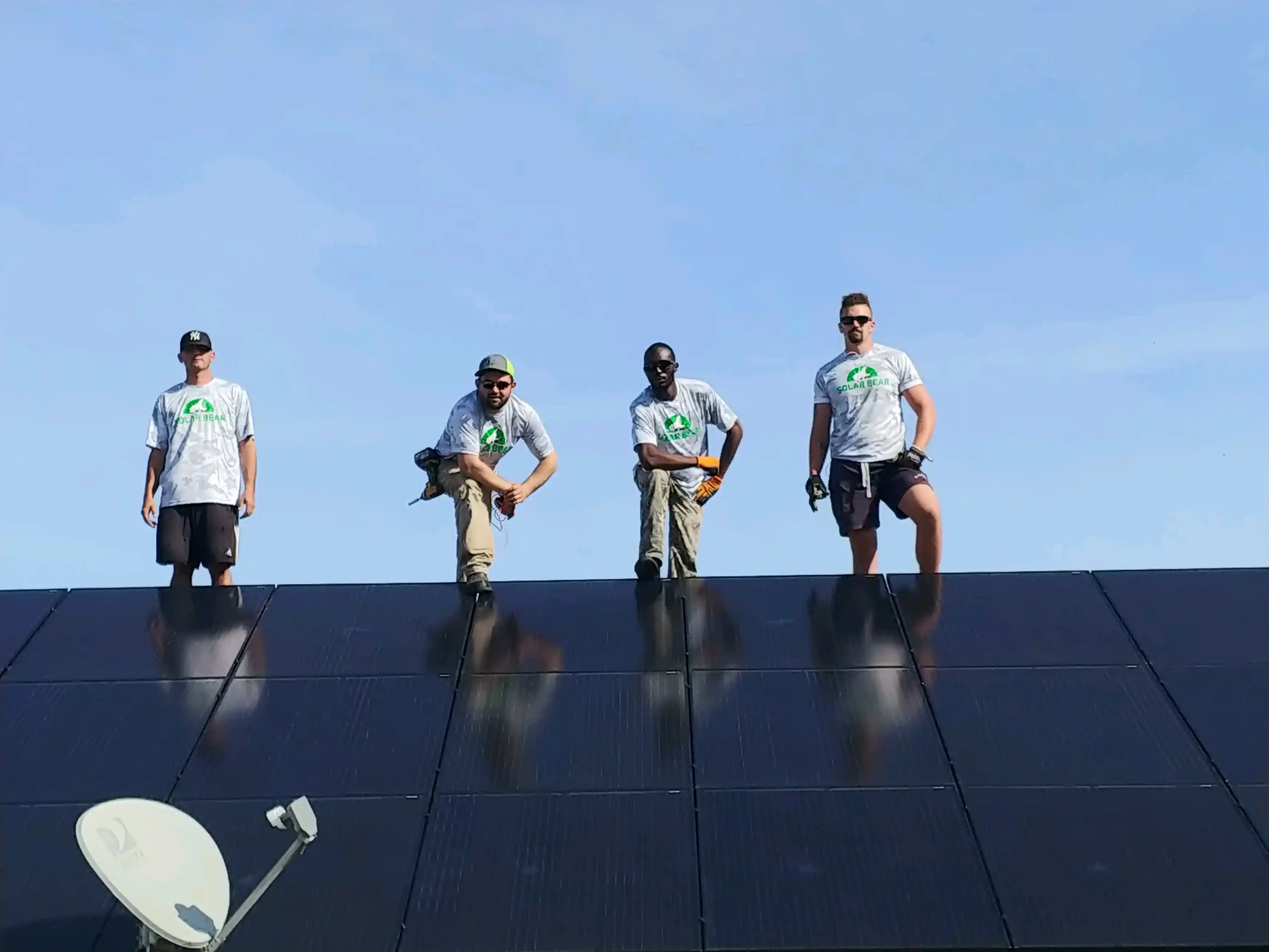
Navigating the landscape of federal credits, state exemptions, and local utility policies requires a strategic partner. The optimal path depends on your home's unique energy profile and your financial goals. Since the earliest days of Florida's state-level solar incentives, the team at Solar Bear has been helping homeowners in the Orlando, FL area maximize their solar investment with data-driven assessments to build the perfect system. For a personalized analysis and a free, no-obligation quote, contact our expert team today.